CONTROL Resonant Review: My Game of the Year
Spoiler-free review · Played on PlayStation 5 · 84 hours played · Platinum trophy earned · All main and side quests completed, hidden areas and Easter eggs discovered, and postgame Apex bosses defeated.
All gameplay screenshots were captured by me on PlayStation 5.
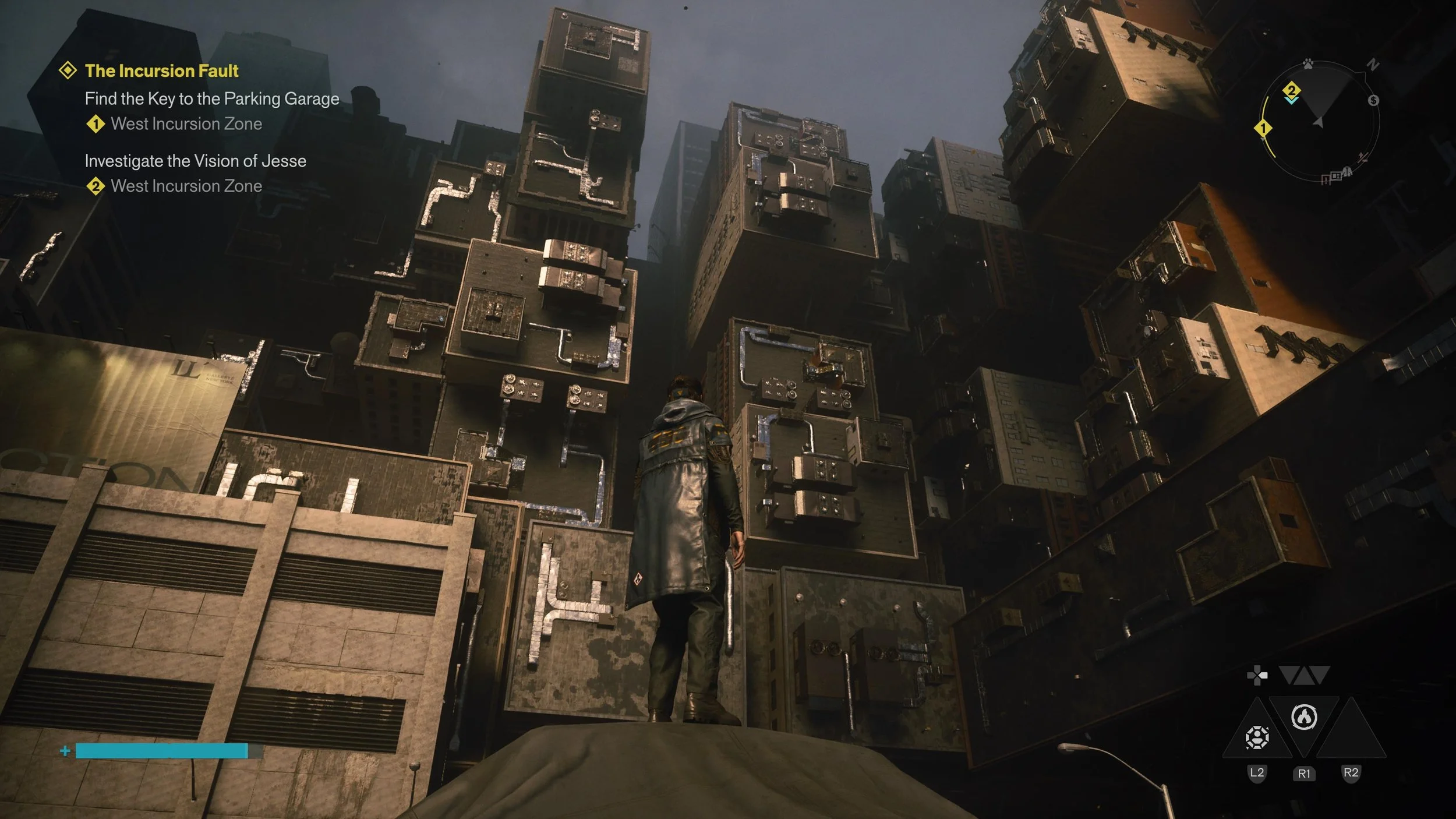
Manhattan, completely rearranged. Exploring it was one of my favorite parts of the game.
I just got the platinum trophy in CONTROL Resonant, and my first thought was that I already want to go back.
I’ve finished the story, worked through the side quests, solved puzzles, hunted down secrets, and found pretty much every Easter egg I could get my hands on. I’ve spent enough time with this game for the initial excitement to wear off. Somehow, I came away loving it even more.
This is my personal game of the year. At this point, it’s also one of the greatest gaming experiences I’ve ever had. That’s a big statement, but the thing that keeps coming back to me is how much care Remedy put into the whole experience. The world, the performances, the combat, the side content, the sound, even the documents scattered throughout it all: there is so much here that rewards paying attention.
CONTROL Resonant pulls off things I honestly don’t think I’ve seen another game even attempt. And somehow, through all the insanity, it holds onto a very human story.
Manhattan, Completely Rearranged
Taking Control out into Manhattan could have gone in a fairly predictable direction. More space, more enemies, a bigger version of what came before. What impressed me is how much the move changes the experience. The familiar shape of a city gives Remedy something to pull apart. Streets, buildings, and the relationship between them become unreliable. You recognize enough of the world to understand how wrong it has become.
The folding architecture immediately made me think of Inception, but moving through it gives that comparison a different meaning. You have to navigate the distortion yourself. Something that looks like an impossible background can become part of the route you’re trying to understand. Gravity affects how you read a space, and that makes traversal a real part of the game.
I loved how often that forced me to stop and look. Sometimes I was figuring out where to go. Other times I just wanted to take in what was in front of me. There is an enormous amount of detail in the way Remedy puts these environments together, and the art direction makes even the most overwhelming spaces feel deliberately composed.
The visual energy sometimes reminded me of Spider-Verse. The scale of the bosses, the supernatural powers, and the feeling of moving through a devastated Manhattan also brought Evangelion and Attack on Titan to mind. There is that same combination of exhilaration and unease: you’re capable of something extraordinary, and the thing in front of you can still make you feel incredibly small.

This is the kind of scale that had me thinking about Evangelion and Attack on Titan.
Even with those comparisons, I never felt like the game lost its own identity. It’s still completely Remedy, just bigger, crazier, and way more stylish. The strange humor, the institutional weirdness, the tension between something terrifying and something almost ridiculous—all of that survives the change in scale.
I also kept thinking about the creative confidence I associate with Kojima’s work. There is a willingness here to commit to an unusual idea and trust the player to follow it. I appreciate that. There was so much here that had me thinking, how the hell did they come up with this? Following through and making those ideas playable is an achievement in itself.
The Combat Took Time to Click
The combat has a similar confidence. Shifting to Dylan and putting the transforming melee weapon, the Aberrant, at the center gives Resonant its own physical identity. The different forms, supernatural abilities, and aerial action create a more immediate, aggressive relationship with the enemies around you.
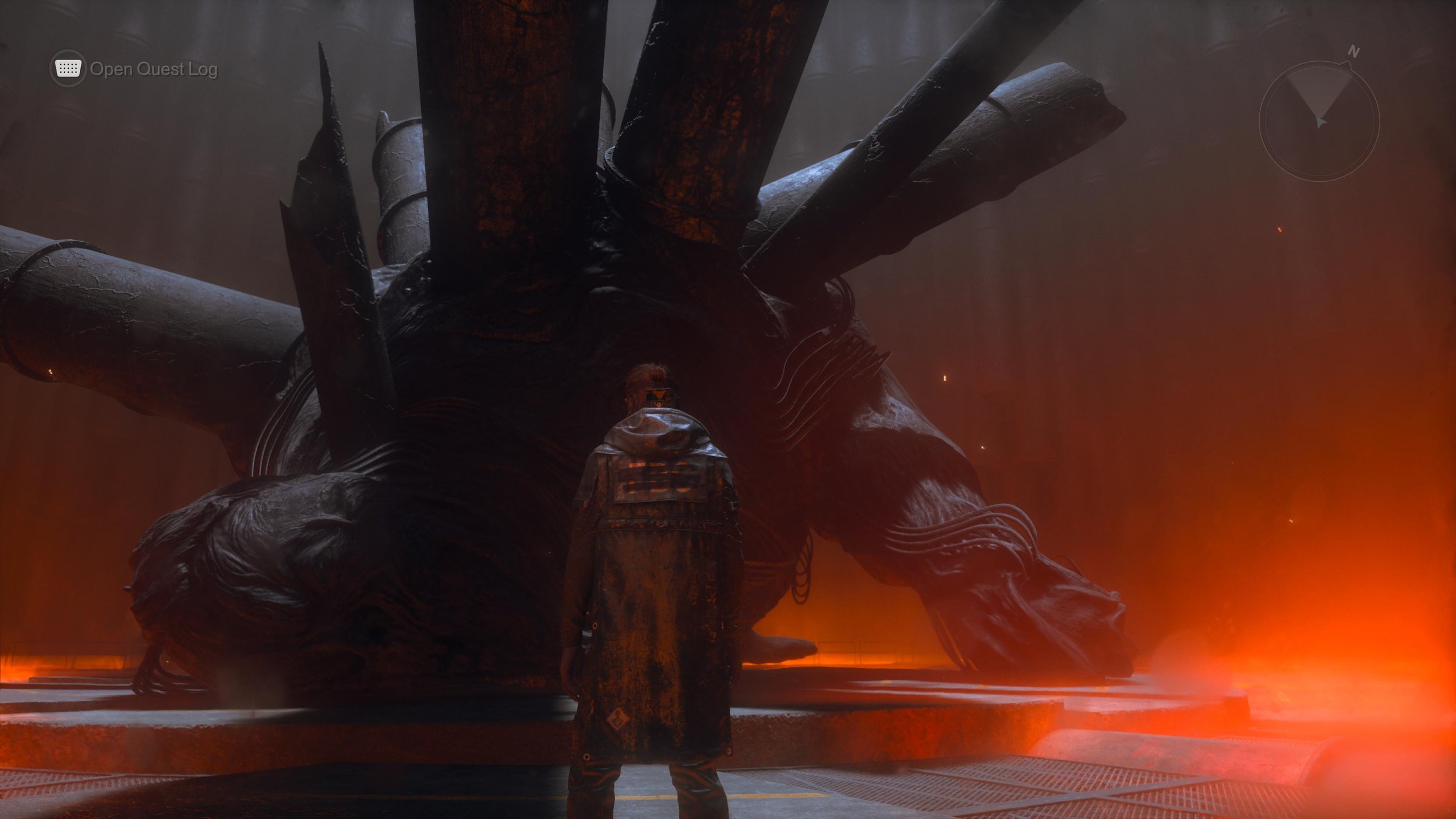
Dylan facing an industrial nightmare. The scale of these encounters is ridiculous — in a good way.
The closest comparison I kept making was Control crossing over with Devil May Cry. There is a lot of pleasure in bringing movement, weapon attacks, and powers together until the encounter starts to flow. The spectacle helps, obviously, but actually being responsible for that flow is what makes it satisfying.
What really hooked me was how the combat started coming together. Melee attacks, abilities, movement, and executions became more natural as I got comfortable, and I started enjoying fights that would have overwhelmed me earlier. Once those pieces click, you can feel why the system is built around momentum. That progression from struggling with the chaos to finding my rhythm was incredibly satisfying.
Getting there took some time. The Artist gave me trouble early on—I was playing before launch, before the first patch—and I was still learning the combat’s rhythm. Trying to get comfortable with the fighting while also making sense of these environments could be overwhelming. As I learned to use my expanding options, though, I got more and more hooked.
I also kept playing after the story and defeated all the postgame Apex bosses. My enjoyment carried into that part of the game, too. After struggling to get comfortable early on, I ended up wanting more opportunities to spend time with the combat. That says a lot about how much it grew on me.
Dylan Is What Stayed With Me
What surprised me most, though, was how much Dylan mattered to the experience.
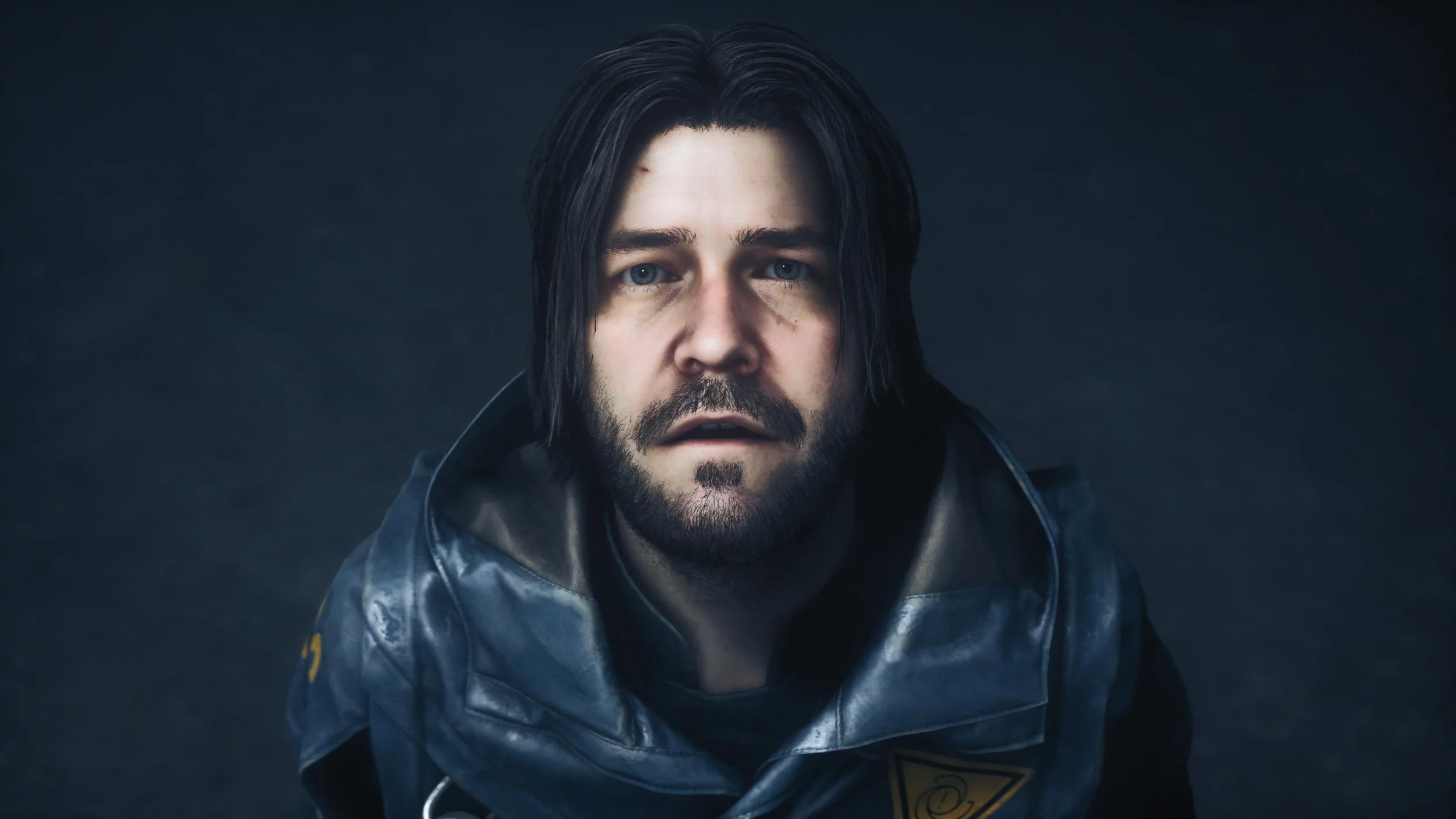
Sean Durrie brings out the vulnerability in someone who was never given a fair chance at an ordinary life.
Sean Durrie does an excellent job with him. Dylan could easily have been swallowed up by the scale of the game around him. Instead, his performance gives all that chaos an emotional center. I cared about what this experience meant to someone who had already lost so much of his life.
The innocence in Dylan really stayed with me. I read him as someone who still has a child inside him trying to make sense of the world. He was taken by the Federal Bureau of Control, kept inside an institution, and denied so much of the experience that would normally help a person grow. His history with the Hiss and the years he lost afterward make that separation even more painful.
By the time he gets out into Manhattan, the ordinary life he might have had has already been torn apart. He barely gets the opportunity to encounter the world on his own terms before he’s expected to help save it.
That’s a horrible situation when you sit with it. He has enormous power and very little experience of freedom. The people around him have reasons to fear him, while he is still trying to understand who he can be. He’s doing the best he can under circumstances that have given him very few fair chances.
I appreciated that Durrie lets that vulnerability exist alongside the character’s danger. There is curiosity in Dylan, and a sense that some experiences are reaching him without the layers of familiarity another adult would have. That quality makes him compelling to watch. You can feel how much of life he has missed.
As an actor, that is the kind of work I respond to. I’m interested in the thought behind a reaction, how someone listens, and how a character’s history affects an ordinary exchange. A performance like this has to hold onto the person while the script asks him to deal with increasingly impossible circumstances. Durrie gives me that person.
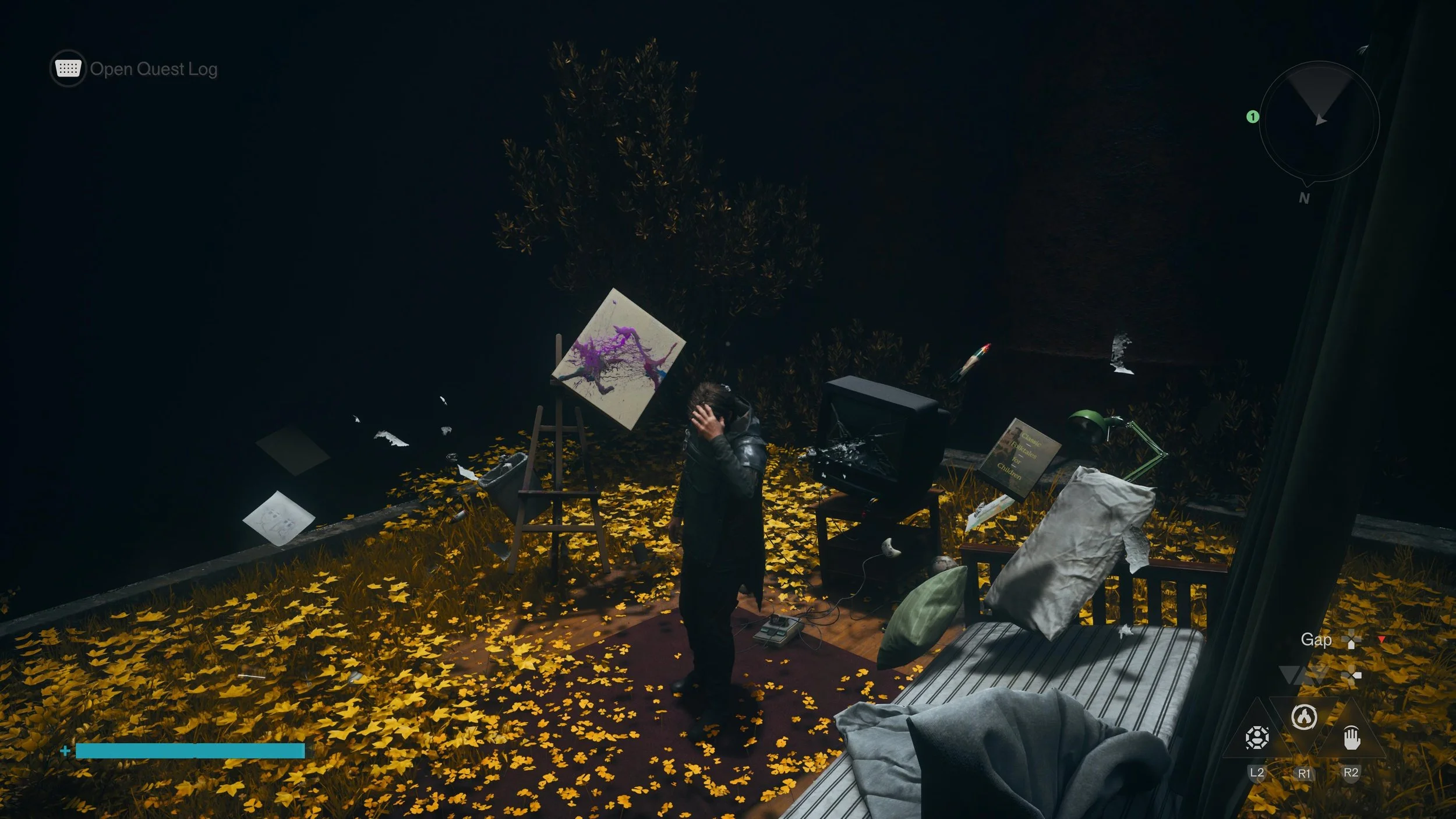
A quieter space, full of details worth stopping for. That care runs throughout the game.
Dylan’s past also makes the idea of redemption complicated. The deaths associated with him have consequences, and the Hiss’s influence is part of that history. Understanding what happened doesn’t simply remove the grief, the fear, or the weight he carries. I liked having to hold all of that together while getting to know him from this new perspective.
His relationship with the FBC adds another uncomfortable layer. These are the people who confined him, and now they need him. Every opportunity to help comes with that history attached. I kept coming back to how difficult it would be to establish your own identity when an institution has spent so much of your life deciding what you are.
The supporting performances help make those questions feel personal. Frankie Kevich’s Zoe De Vera gives Dylan someone to connect with through the crisis, and I appreciated the human scale those exchanges bring to the story. Courtney Hope’s Jesse carries the history between the siblings into this new perspective. That relationship gives Dylan’s search an emotional weight that survives all the mythology around it.
The cast deserves credit for making this world feel inhabited. They have to speak about deeply strange things with the familiarity of people who live around them. That takes conviction. The humor, the concern, and the tension between people all help give the supernatural material something solid to stand on.
The Side Paths Are Worth Exploring
That same attention carries into the side content, which is a huge part of why I stayed with the game all the way to the platinum.
I thoroughly enjoyed going off the main path. The side quests and puzzles kept expanding my understanding of the world, and the optional discoveries fed back into the atmosphere and lore. I wanted to see what Remedy had put around the next corner. The game had earned that curiosity.
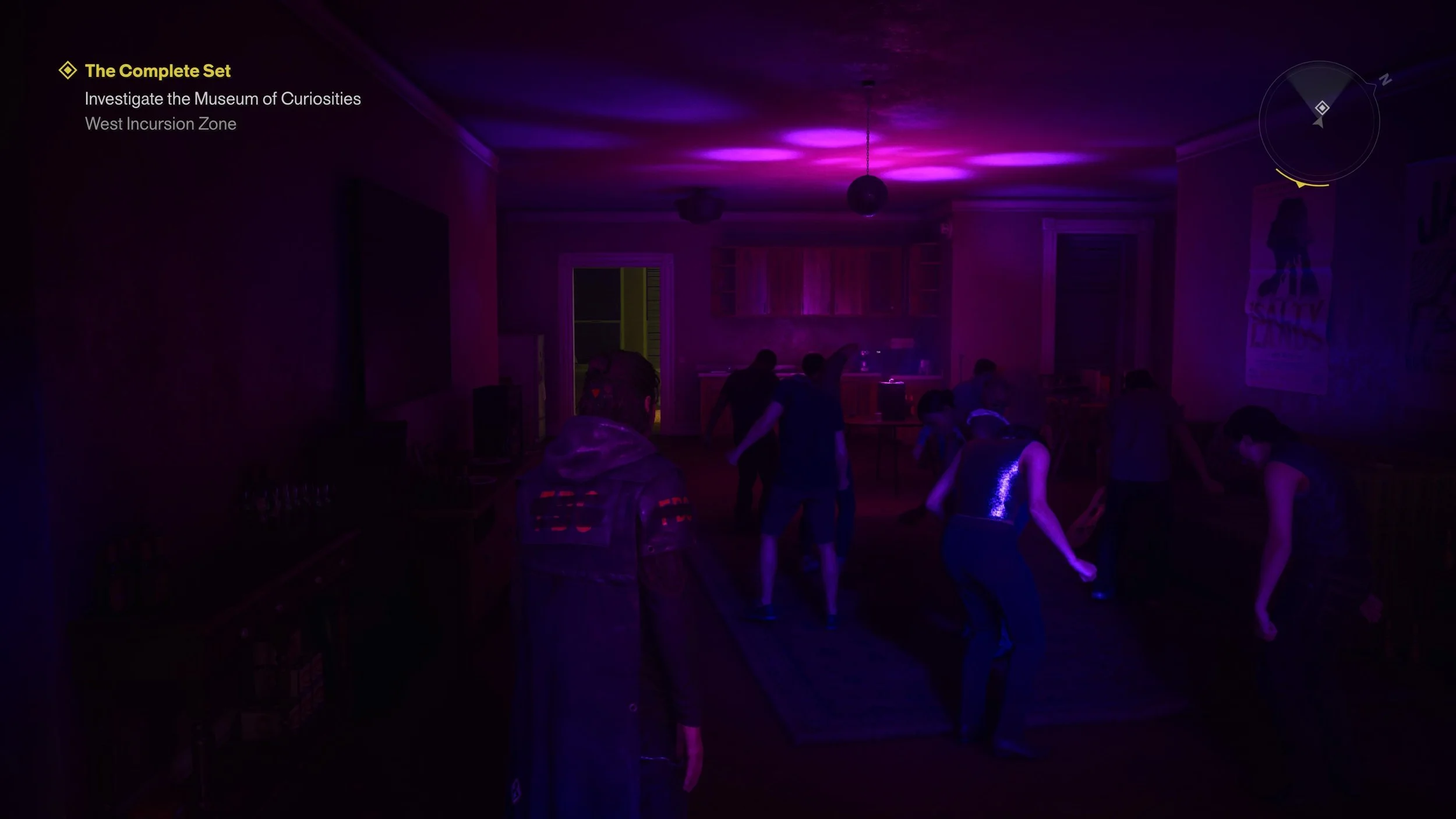
Somewhere between saving Manhattan and chasing secrets, I ended up at a party.
The puzzles were especially satisfying when they made me think about the space or the strange rules at work within it. In a world this creative, exploration becomes more interesting when you have to pay attention to how things behave. It makes discovery feel connected to understanding the place you’re in.
That’s also why the documents matter so much. A huge amount of the world’s history and personality lives in the material you can stop and read. They deepen your understanding of the FBC, the people inside it, and the way this organization tries to make sense of things that resist explanation.
I love the absurdity of that. Reality can be falling apart, and somebody still has to write a report. There is something very funny and very believable about an institution trying to turn the incomprehensible into a process. The paperwork helps make the FBC feel like an organization full of people, with all the habits and limitations that come with that.
Those details also make the darker parts more effective. The more familiar the institution becomes, the more disturbing its treatment of a person like Dylan can feel. You spend time with its language and its attempts to explain the world, and you also see the cost of having people reduced to something it can contain or use.
For me, reading and exploring were central to enjoying the game. They gave the larger events context and made the world feel like it extended beyond Dylan’s immediate objective. By the time I finished, the platinum felt like a natural result of wanting to keep looking.
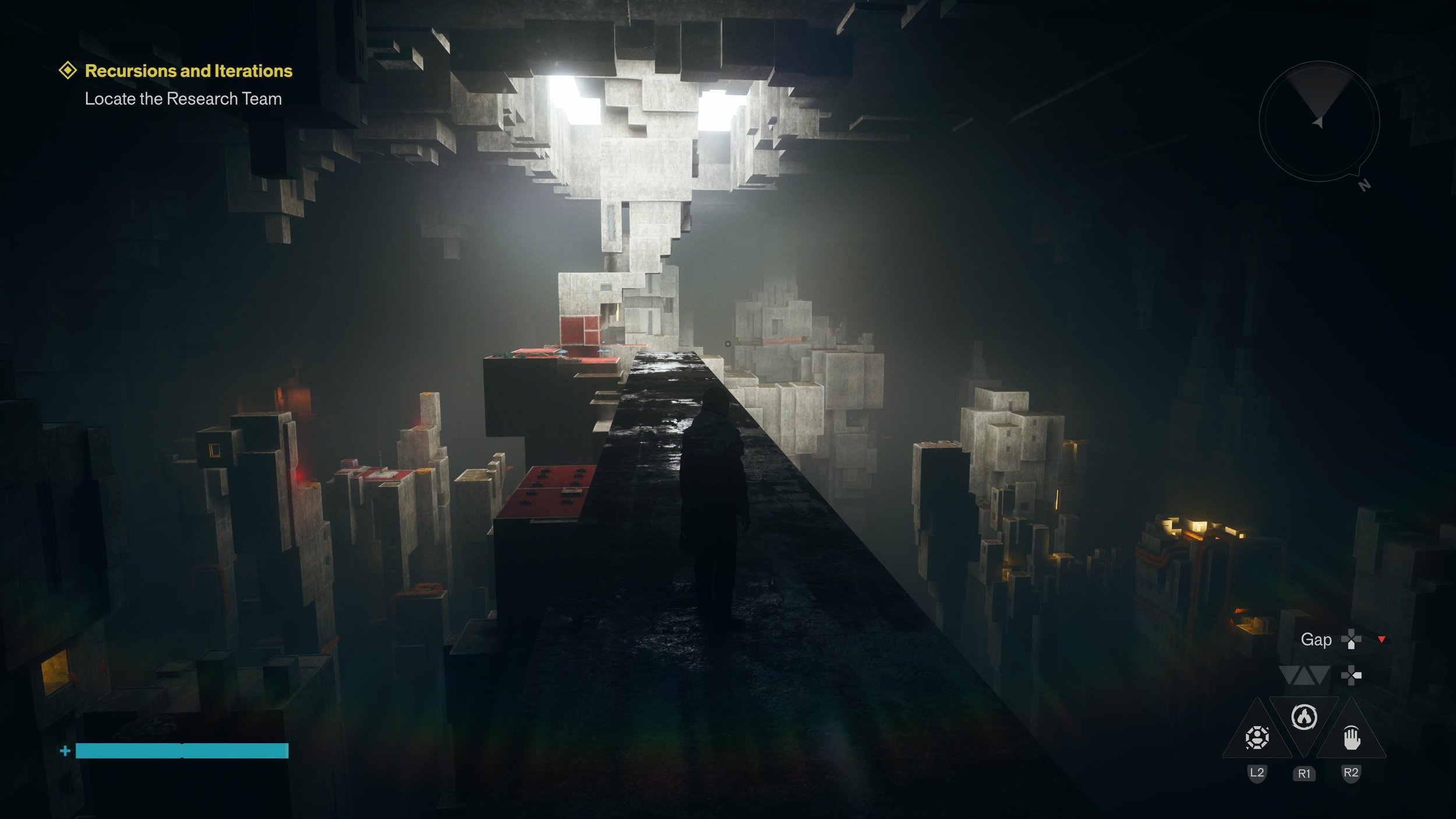
Trying to make sense of spaces like this is part of what made exploration so satisfying.
The Bigger Remedy Universe
I enjoyed spotting connections to Control and Alan Wake 2, although my familiarity with those games is limited. I own Control Ultimate Edition but have barely played it, and I haven’t played Alan Wake 2. I know who Alan Wake is and understand the general premise, so I recognized some references without catching every connection.
Dylan’s story gave me plenty to care about on its own. The references I understood added another layer, and the ones I didn’t fully understand made me curious. After spending 84 hours with Resonant, I’m interested in learning more about the wider Remedy universe.
The Sound Deserves Credit, Too
I also have to give the audio its due, because playing with my PS5 3D-audio headset made a HUGE difference.
The sound helped pull me into these spaces. With so much happening visually, having that sense of sound around me made the experience more immersive and gave the environments another dimension. I was already impressed by the art direction, and the audio made it easier to feel surrounded by it.
The controller haptics added to that physical connection, too. Between the action on screen, the sound in my ears, and the feedback in my hands, the game could become incredibly absorbing. I appreciated how much those elements contributed to the experience I was having on PS5.
Why It’s My Game of the Year
After finishing so much of it, what stands out is how well these parts support each other. The performances gave me a reason to care about the people. The lore made me curious about the world. The art direction made me want to explore it, and the movement and combat made spending time there exciting.
It also takes time to settle into. Between the early combat adjustment and the amount of information in this world, Resonant asks you to give it your attention. I enjoyed taking that time, and I came away feeling that the effort was rewarded.
I haven’t started New Game Plus yet, but I’m already looking forward to returning with a better understanding of the combat and the story. I want to try different approaches, revisit the performances, and see which details stand out now that I know where the journey goes.
That’s why the platinum means something to me here. I wanted to spend that time in this world. I wanted to see the side content, solve the puzzles, read the lore, and follow the strange ideas as far as they went.
CONTROL Resonant is my personal game of the year, and I really hope it gets that recognition. Remedy made something that excited me as a player and gave me a lot to appreciate as an actor and a creative person.
I’ve finished the game, earned the platinum, and I’m still thinking about Dylan and that completely insane version of Manhattan.
I’m looking forward to going back.
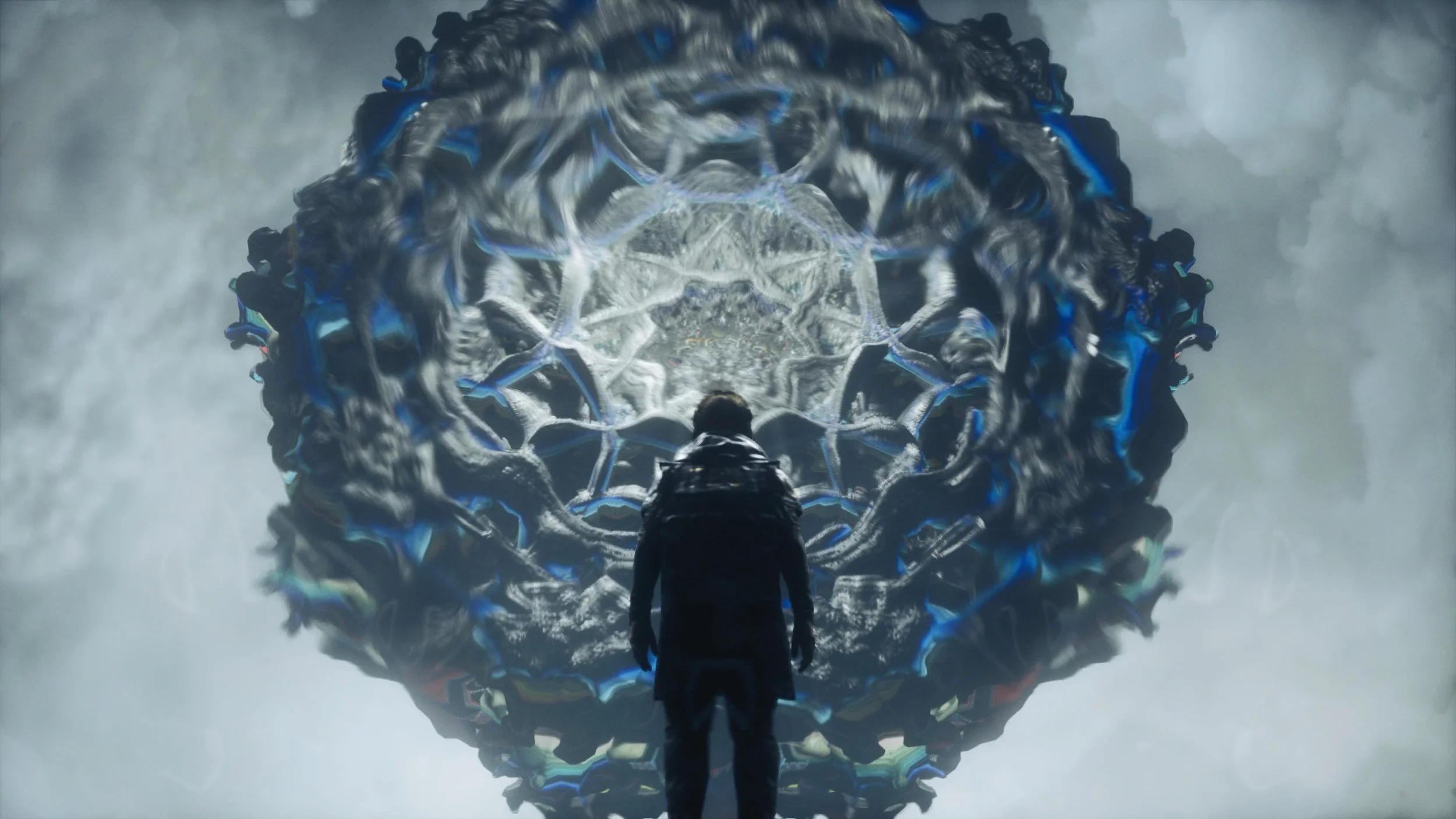
Platinum earned. This world is going to stay with me.